In the fast-evolving world of engineering, customized gearbox motor products have become essential. Experts believe these products can enhance productivity and efficiency significantly. Dr. Emily Hart, a renowned specialist in gear systems, has noted, "The right gearbox motor can transform an entire operation." Her insight reflects the growing reliance on customized solutions in various industries.
When selecting customized gearbox motor products, the choice can be overwhelming. Factors like precision, durability, and compatibility play a crucial role. Companies often face difficulties matching the right motor and gearbox specifications to their unique requirements. It's vital to understand that not all products will meet every need. This requires careful consideration and sometimes trial and error.
Investing in these products can lead to innovative solutions. However, it's important to recognize that not all customizations yield immediate results. Reflecting on experiences can help professionals make informed decisions. By understanding the nuances of customized gearbox motor products, companies can achieve remarkable advancements in their operations.
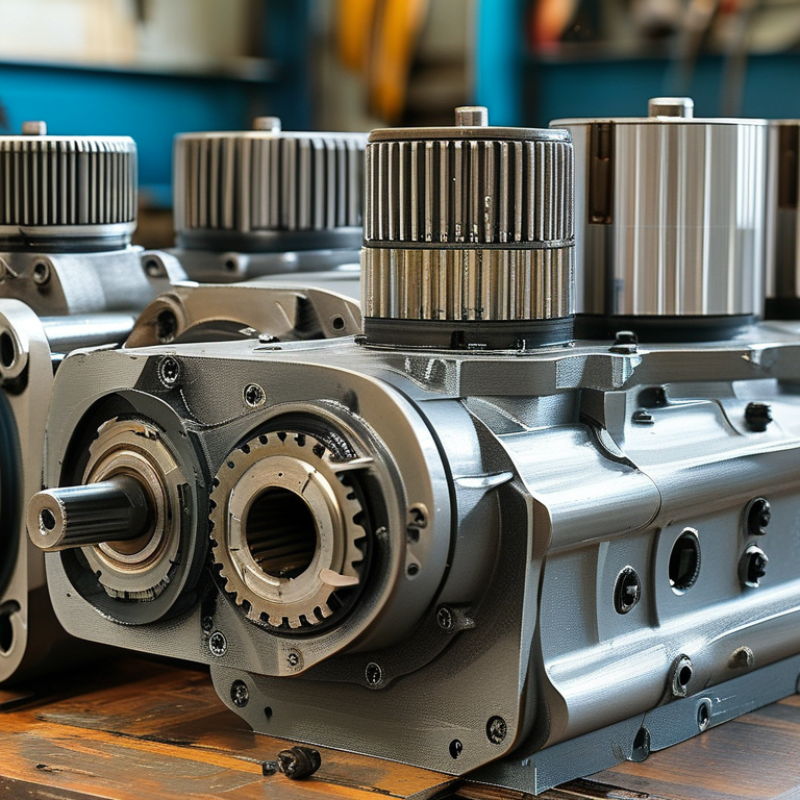
Overview of Customized Gearbox Motors
Customized gearbox motors have become essential in various industries. They offer precision, efficiency, and adaptability for specific applications. When selecting a motor, understanding its design is crucial. These motors are tailored to optimize performance in different machinery. They enhance torque and speed control, essential for complex tasks.
Many industries benefit greatly from these motors. Manufacturing, robotics, and automotive sectors all rely on them. Users often face challenges in choosing the right specifications. Not all customized solutions fit every need. There's a risk in not fully understanding the requirements. This can lead to inefficiencies or mechanical failures, which can be costly.
It's vital to consider factors such as size, load capacity, and efficiency. Each motor serves a unique purpose, so customization is key. A deeper comprehension of how these motors integrate with machinery is necessary. Customized gearbox motors not only improve productivity but also reduce maintenance needs. Reflecting on previous experiences with these systems can provide insights for future enhancements.
Key Features to Consider in Customized Gearbox Motors
When considering customized gearbox motors, several key features must be evaluated.
Efficiency is paramount. Reports indicate that high-efficiency motors can reduce energy consumption by up to 20%.
The right gearbox can significantly enhance performance, ensuring optimal torque delivery and speed variations.
Another essential is the material quality. Durable materials often translate to a longer lifespan.
A study by the International Gearbox Association notes that better materials can add years to a motor's operational life.
This results in lower maintenance costs and fewer disruptions in production.
Tips: Always inquire about any specific operational conditions.
Temperature ranges, load requirements, and environmental factors can heavily influence your choice.
Consider how often you will need repairs or replacements.
A gearbox motor that performs well but frequently breaks down may not be worth the investment.
Customization options also matter. A tailored solution can lead to improved performance in specialized applications.
However, it's vital to assess whether the added features justify the costs.
Not all customizations will prove beneficial for every operation.
It's essential to balance needs with practicality.
Top 10 Recommendations for Customized Gearbox Motor Products
Choosing the right customized gearbox motors can be challenging. With so many options, finding products tailored to specific needs is essential. Here are top recommendations for essential features to consider. Pay attention to torque and speed parameters first. These factors directly affect a motor's performance.
Next, look for modular designs. They allow for easy integration and adjustments in various applications. Reliability is crucial; select motors with proven track records in diverse industries. Test results and certifications can provide insight into their durability. Remember that not all products will meet every requirement. Analyze your project’s specific demands critically.
Customization can be a double-edged sword. While tailored solutions might seem perfect, unforeseen issues can arise. Always be prepared to adjust your specifications based on real-world testing. Investing in motors that can evolve with your needs can save time and cost. It's worth conducting thorough research and seeking expert opinions before finalizing your choices.
Applications of Customized Gearbox Motors in Various Industries
Customized gearbox motors have diverse applications across multiple industries. These motors offer
flexibility and efficiency. They are crucial
in manufacturing, agriculture, and robotics. For example, in manufacturing, they drive conveyor belts
and machinery. In agriculture, they power equipment for planting and harvesting.
In robotics, customized gearbox motors provide precise control for robotic arms and automated systems.
This precision enhances productivity. Manufacturing plants benefit from tailored solutions. Gearbox motors
can be designed for specific speed and torque requirements. This customization leads to
better energy efficiency.
Tips: When selecting a gearbox motor, consider the load type and operational environment.
Test the motor in real-world conditions to ensure reliability. Regular maintenance is essential for
optimal performance. Note that not all motors fit
every application. Research is key to making informed choices.
Future Trends in Customized Gearbox Motor Technology
The future of customized gearbox motor technology is evolving rapidly. As industries demand higher efficiency and adaptability, manufacturers are investing heavily in R&D. According to a report by Global Industry Analysts, the custom gearbox market is projected to reach $10 billion by 2027, indicating a significant growth trajectory. This increasing demand emphasizes the need for innovation in design and performance metrics across various sectors, including robotics and automotive.
Emerging technologies, such as additive manufacturing, are transforming how gearbox motors are produced. This method allows for intricate designs that enhance performance while reducing material waste. With rapid prototyping, customization can occur more swiftly. However, the technology does not come without challenges. High initial costs and technical barriers can hinder widespread adoption, requiring thoughtful consideration from companies.
Another trend is the push for smart gearbox systems. These systems incorporate IoT capabilities, enabling real-time monitoring and predictive maintenance. Research from MarketsandMarkets suggests that the IoT in industrial automation could grow to $250 billion by 2025, reflecting a shift towards interconnected machinery. Despite these advancements, many organizations struggle with integrating these technologies effectively, often leading to inefficiencies if not managed properly.
Top 10 Customized Gearbox Motor Products You Need Now
| Product Name |
Power Rating (W) |
Torque (Nm) |
Efficiency (%) |
Customization Options |
| Gearbox Motor A |
1500 |
10 |
92 |
Gear Ratio, Shaft Options |
| Gearbox Motor B |
2000 |
15 |
90 |
Custom Housing Colors |
| Gearbox Motor C |
2500 |
20 |
95 |
Modular Design |
| Gearbox Motor D |
1000 |
8 |
88 |
Special Coatings |
| Gearbox Motor E |
3000 |
25 |
93 |
High Temp Ratings |
| Gearbox Motor F |
1800 |
12 |
89 |
Noise Reduction |
| Gearbox Motor G |
2200 |
18 |
91 |
Extended Lifespan |
| Gearbox Motor H |
1600 |
14 |
87 |
Custom Gear Ratios |
| Gearbox Motor I |
2800 |
22 |
94 |
Integrated Sensors |
| Gearbox Motor J |
3500 |
30 |
96 |
Smart Control Features |
FAQS
: They are used in various industries for precision and efficiency. These motors adapt to specific applications.
Understanding design helps optimize performance in machinery. It ensures proper function for specific tasks.
Users may struggle to choose the right specifications. Misunderstandings can lead to inefficiencies or mechanical failures.
Consider size, load capacity, and efficiency. Each motor serves a unique purpose requiring careful evaluation.
They enhance torque and speed control. This leads to more effective and efficient machinery operation.
Customization can lead to unforeseen issues. Adjustments might be needed based on real-world testing.
Look for torque and speed parameters, modular designs, and proven reliability. These affect performance significantly.
Reflecting on past experiences offers valuable insights. It can help improve decisions for future enhancements.
Conduct thorough research and seek expert opinions. This helps ensure the best choice for your needs.
Many think tailored solutions are perfect. In reality, they can lead to new challenges needing adjustments.
Conclusion
Customized Gearbox Motor Products are essential components in various industries, offering tailored solutions to meet specific operational needs. An overview of these products reveals their significance in enhancing efficiency and performance. Key features to consider when choosing Customized Gearbox Motors include torque, speed control, and compatibility with existing systems, ensuring optimal integration into different applications.
In the realm of industry applications, Customized Gearbox Motors play a vital role in automation, robotics, and machinery, driving innovations that cater to diverse operational demands. Looking ahead, future trends in Customized Gearbox Motor technology suggest advancements in design flexibility, improved energy efficiency, and enhanced control systems, which will further expand their usability across various sectors. Understanding these trends and the top recommendations in the market can help businesses make informed decisions about incorporating Customized Gearbox Motor Products into their operations.

 Kineto Motor