Choosing among the top Gearbox Assemblies manufacturers in China requires more than comparing prices. It demands technical judgment, factory verification, and careful attention to application details. A gearbox that looks suitable on paper may fail under continuous torque, shock loads, heat, or misalignment. The right supplier should demonstrate relevant production experience, stable quality systems, and clear engineering support.
This guide examines Chinese manufacturers through practical criteria, including gearbox design capability, machining accuracy, material selection, assembly control, and testing procedures. Readers should look for evidence such as inspection records, load-test results, dimensional reports, and traceable component sourcing. Factory audits can also reveal important details: clean assembly areas, calibrated measuring tools, organized production lines, and technicians who understand the equipment’s working environment.
Certifications matter, but they are not the entire story. A certificate cannot replace reliable communication or consistent after-sales service. Ask whether the manufacturer can provide prototypes, customized ratios, drawings, maintenance guidance, and realistic delivery schedules. References from similar industries may offer stronger evidence than polished brochures.
The ranking process is not perfectly objective. Product quality can vary between factories, production batches, and application conditions. Some suppliers communicate confidently but provide limited technical proof. Others may have modest marketing materials yet strong engineering teams. That difference deserves closer examination. By comparing documented capability, customer experience, testing discipline, and long-term support, buyers can build a more dependable shortlist and reduce costly gearbox failures. Industry requirements change, too. This guide should support verification, not replace it.
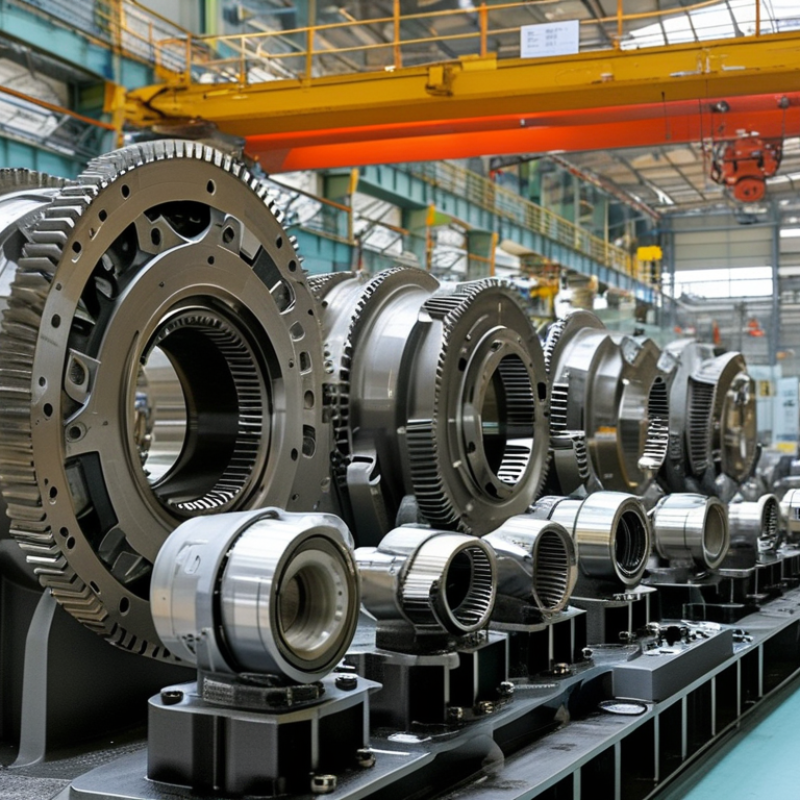
A high-quality gearbox assembly manufacturer in China proves capability through measurable process control, not polished brochures. The 2024 World Robotics report recorded 541,302 industrial robot installations worldwide in 2023. This growth increases demand for precise, repeatable gearbox assemblies. Manufacturers should show gear accuracy records, material certificates, heat-treatment curves, and traceable batch numbers. ISO 1328 inspection results matter. So do backlash, noise, vibration, and torque tests under realistic loads.
Look closely at the factory floor. CNC machining should be supported by calibrated measurement equipment, controlled lubrication, and documented assembly procedures. A reliable supplier uses failure mode analysis, incoming inspection, and end-of-line testing. The U.S. Department of Energy reports that motor-driven systems consume about 70% of industrial electricity. Therefore, efficiency, sealing quality, and alignment deserve serious attention, not vague promises. Ask for measured efficiency data at several operating speeds.
Experience also appears after shipment. Does the manufacturer provide installation guidance, spare-part identification, and structured failure analysis? ISO 9001 certification helps, but it cannot replace technical evidence. No factory is flawless. That is acceptable. Hiding recurring defects is not. Some suppliers still rely too heavily on manual adjustments, which can create inconsistent backlash between batches. Independent audits and sample-based acceptance testing reduce that risk. In practice, the strongest Chinese gearbox assembly manufacturers combine engineering depth, transparent records, and disciplined improvement rather than competing only on price.
| Evaluation Dimension | What High-Quality Manufacturers Typically Provide | Practical Data or Acceptance Indicator | Recommended Verification Method |
|---|---|---|---|
| Gearbox Type and Application Fit | A product range covering planetary, helical, bevel-helical, worm, and other application-specific gearbox assemblies. | The selected gearbox is matched to load profile, duty cycle, speed, torque, installation position, and ambient conditions. | Review the application calculation, load spectrum, service factor, and technical specification before ordering. |
| Torque and Speed Capability | Clearly stated rated torque, peak torque, input speed, output speed, and allowable radial and axial loads. | Published ratings should distinguish continuous duty from intermittent or peak operation and include service-factor assumptions. | Compare the manufacturer’s selection calculation with the actual motor power, operating hours, starts per hour, and shock loads. |
| Gear Manufacturing Accuracy | Controlled gear cutting, heat treatment, grinding, and dimensional inspection processes. | Gear accuracy is documented according to a recognized gear standard, such as ISO 1328 or an equivalent national standard. | Request gear inspection reports, tooth-contact records, runout measurements, and sampling plans. |
| Material and Heat Treatment | Traceable materials for gears, shafts, housings, and bearings, supported by controlled carburizing, nitriding, or through-hardening processes. | Material certificates, hardness results, case-depth records, and heat-treatment batch traceability are available. | Audit material certificates and test reports against the approved drawing and purchase specification. |
| Efficiency | Design features intended to reduce frictional and meshing losses, including suitable gearing, bearings, lubrication, and sealing. | Efficiency is stated for the actual ratio, speed, load, lubrication condition, and temperature rather than as a generic maximum. | Ask for test conditions and compare measured input and output power using a documented test procedure. |
| Backlash and Positioning Performance | Backlash options appropriate for conveyors, automation, robotics, indexing, or general transmission applications. | Backlash is specified in arc minutes or another clearly defined angular unit at a stated measurement location and load condition. | Check backlash, torsional stiffness, repeatability, and hysteresis test results using the intended mounting configuration. |
| Noise and Vibration Control | Balanced rotating parts, accurate gear meshing, rigid housings, suitable bearings, and controlled assembly tolerances. | Noise and vibration limits are defined for a specified speed, load, mounting method, and measurement distance. | Review factory acceptance-test records and, where necessary, conduct an independent noise or vibration test. |
| Thermal Performance | Thermal calculations that consider power loss, enclosure design, lubrication, ambient temperature, and duty cycle. | Permissible housing temperature, thermal rating, lubricant grade, and cooling requirements are stated in the technical documentation. | Verify temperature-rise results during a continuous-load test that represents the intended operating cycle. |
| Sealing and Lubrication | Correctly selected seals, documented lubricant specifications, fill quantities, and maintenance instructions. | The gearbox is supplied with compatible seals and lubricant guidance for the stated temperature range, orientation, and speed. | Inspect seal design, lubricant compatibility, oil level, breather arrangement, and leakage-test records. |
| Quality Management System | Documented procedures for incoming inspection, process control, final inspection, nonconformance handling, and corrective action. | A valid quality-management certificate, such as ISO 9001, is supported by an auditable scope relevant to gearbox manufacturing. | Verify certificate validity, audit the production process, and review records for similar gearbox assemblies. |
| Testing and Inspection | Final inspection covering dimensions, rotation, backlash, leakage, noise, vibration, temperature, and load-related performance where applicable. | Each shipment includes a defined inspection record linked to the production batch or serial number. | Agree on an inspection and test plan before production and retain signed records with the shipment documentation. |
| Customization and Engineering Support | Support for mounting dimensions, shafts, flanges, ratios, brakes, encoders, lubrication, coatings, and special environmental requirements. | Approved drawings, revision control, tolerance information, and documented engineering-change procedures are available. | Evaluate the design-review process and approve drawings before tooling, sampling, or mass production. |
| Compliance and Documentation | Complete technical files including drawings, manuals, declarations, inspection reports, packing specifications, and maintenance instructions. | Documentation identifies the applicable standards, operating limits, installation requirements, and safety precautions. | Review documents for consistency with the destination market, equipment risk assessment, and contractual requirements. |
| Production Capacity and Lead-Time Control | Capacity planning, material-control procedures, defined production stages, and realistic delivery commitments. | Lead time is quoted separately for standard products, customized products, prototypes, and repeat orders. | Confirm capacity using a production schedule, sample order history, bottleneck analysis, and agreed milestone dates. |
| Warranty and After-Sales Service | Clear warranty terms, spare-parts support, troubleshooting procedures, failure analysis, and technical response channels. | Warranty coverage defines duration, exclusions, operating conditions, claim evidence, and responsibilities for corrective action. | Review the warranty document, service-response commitments, spare-parts availability, and documented corrective-action process. |
Request gear accuracy records, material certificates, heat-treatment curves, and traceable batch numbers. Test backlash, noise, vibration, torque, and efficiency under realistic loads. Brochures are not enough.
Many factories use CNC hobbing, shaping, gear grinding, and controlled heat treatment. Assembly may include servo presses, digital torque tools, and guided workstations. Automation helps, but cannot fix weak process discipline.
Start with the duty cycle, not the catalog price. Conveyors need steady torque and low noise. Robotic joints need low backlash and repeatable positioning. Agricultural equipment may face dust, vibration, and shock loads.
Ask for speed, torque, ratio, efficiency, temperature limits, and service-factor calculations. Review drawings, materials, bearing choices, sealing methods, and lubrication details. Keep everything in writing.
It is essential. Test samples under actual speed, torque, and load conditions. Measure backlash after repeated cycles. Check noise from a stated distance and record temperature rise.
Look for calibrated measurement equipment, controlled cleanliness, labeled components, and documented assembly steps. Check lubrication controls and tool calibration intervals. A clean floor helps, but repeatable data matters more.
No. A quality certification supports process discipline, but it cannot replace technical evidence. Review inspection results, failure analysis, rework records, and end-of-line testing. Certification is only one piece.
Manual adjustment can create inconsistent backlash between production batches. It may also hide unstable machining or assembly processes. Sample-based acceptance testing and independent audits reduce this risk. The risk remains.
Useful support includes installation guidance, spare-part identification, and structured failure analysis. Clear communication can prevent redesigns and emergency replacements. A lower quotation may create higher operating costs later. That is easy to overlook.
Choosing the right gearbox assembly manufacturer in China requires more than comparing prices. A high-quality supplier should demonstrate strong engineering capabilities, stable production processes, precise machining, reliable assembly control, and consistent quality inspection. Leading manufacturers may specialize in industrial gearboxes, automotive systems, robotics, agricultural equipment, or heavy-duty machinery, so their product strengths should match the intended application. Modern manufacturing technologies, including CNC machining, automated assembly, heat treatment, gear grinding, digital testing, and computer-aided design, play an important role in achieving accuracy, efficiency, and durability.
When comparing Chinese suppliers, buyers should evaluate load capacity, transmission efficiency, service life, noise and vibration performance, delivery capability, and after-sales support. Quality certifications, traceable production records, material control, and final performance testing can help confirm reliability. Customization is also essential for projects requiring special ratios, mounting designs, materials, sealing systems, or operating conditions. In addition, experienced export support, clear technical communication, secure packaging, documentation, and compliance with destination-market requirements can make cooperation smoother. A balanced assessment of technology, quality, flexibility, cost, and service will help buyers select dependable Gearbox Assemblies for different industries.

 Kineto Motor